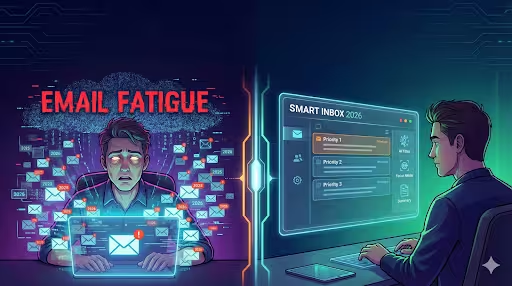
Email still works in e-commerce.
But inboxes are more crowded than ever before.
Today, on average, people receive 120+ emails a day, and almost 55% of all the emails are opened from mobile devices, where the attention span is short, and competition for it is fierce.
At the end of the day, customers are not tired of email as a channel; they’re sick and tired of mailers that say nothing and demand more attention than they give. This is what’s known as email fatigue, and it quietly diminishes open rates, depresses click-through rates, drives up unsubscribes, and weakens full-funnel conversions.
When engagement tanks, it’s frequently not your product or offer; it’s audience fatigue.
This post is here to tell you what email fatigue really is, how it impacts revenue in the long run, and provide 8 practical fixes, such as smarter segmentation, better frequency control, better content rotation, send-time optimization, and personalized flows based on what people actually want or like.
What Is Email Fatigue?
Email fatigue occurs when a subscriber is overwhelmed or disinterested in emails they receive from a brand. It is not always visible, but it is silently killing your sales. More often, it builds quietly as people begin mentally switching off messages they once found useful or interesting.
This doesn’t necessarily mean you are over-emailing. Fatigue often sets in not because of how many emails are received, but how they’re experienced. Common causes include:
- Emails feel redundant: When subject lines, deals, and messaging all start to feel the same, subscribers get wise to swipe or ignore them. Even strong promotions can be diluted if they seem predictable.
- Mismatched messages: When you send someone who’s still browsing sales-loaded emails, or a loyal repeat buyer gets a generic promotion, it causes friction. When emails are irrelevant to where the subscriber is in their journey, they feel uninterested.
- Timing matters: Emails that show up when recipients are busy, distracted, or unable to act tend to get ignored. Mistiming is compounded the more you repeat it, leading to disengagement as time goes on.
- Content is difficult to scan or act on: Long text blocks, overly graphic layouts, or ambiguous CTAs make emails feel like work. If it’s like a tedious job, a lot of subscribers just won’t bother.
When people get tired of things, they don’t immediately unsubscribe. They simply stop paying attention. Open rates drop. Clicks disappear. Emails are skimmed or ignored altogether. That silence is the most treacherous part, because it wears at performance without giving you a clear signal warning.
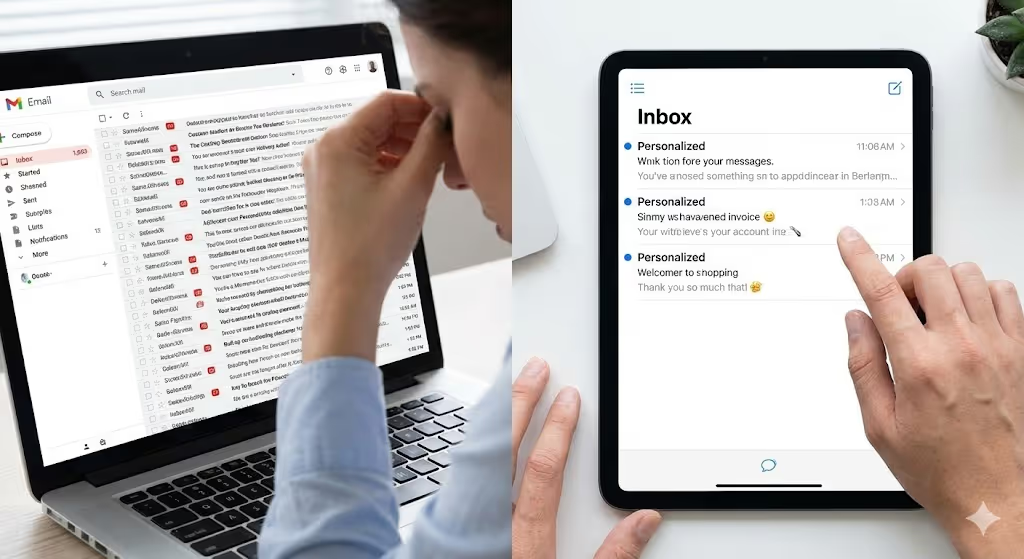
Why Email Fatigue Is Preventing You From Reading And Winning
Email fatigue often builds quietly, but once you know what to look for, the signs are easy to spot. From a readability perspective, fatigued subscribers do not pay a lot of attention to your emails. They don’t read emails all the way through, skip buttons and links, and overlook important product details. Emails stop feeling helpful and begin to fade into the background.
In the numbers, this lack of attention creates consequences over time. People open fewer emails, and once there are enough, they unsubscribe. Clicks decrease when folks don’t get to the CTA or are not motivated to act. Conversions suffer, spam complaints increase, and inbox placement can gradually worsen. These changes are often subtle, and a Shopify owner may not even notice all of them at first.
For e-commerce brands, this means sales. Recovered orders from abandoned cart emails decrease, back-in-stock notifications go unnoticed, launches don’t get the attention they deserve, and repeat purchases dry up. If email fatigue becomes a recurring issue, it silently eats away at engagement over the long term and revenue for the brand.
Top 8 Techniques on How to Get Over Email Fatigue in 2026
Email fatigue is not a signal to stop sending emails. It’s time to email more intelligently.
The majority of Shopify brands run into performance issues not because they’re sending too many emails, but because their emails begin to feel repetitive, poorly timed, or irrelevant. The good news is, curing email fatigue doesn’t involve a volume cut or an unnecessary injury to revenue. It calls for tiny, tangible changes in the way emails are conceived, composed, and sent.
Below, we’re sharing 8 strategies to help ecommerce brands combat email fatigue in 2026, while maintaining strong engagement and conversions.
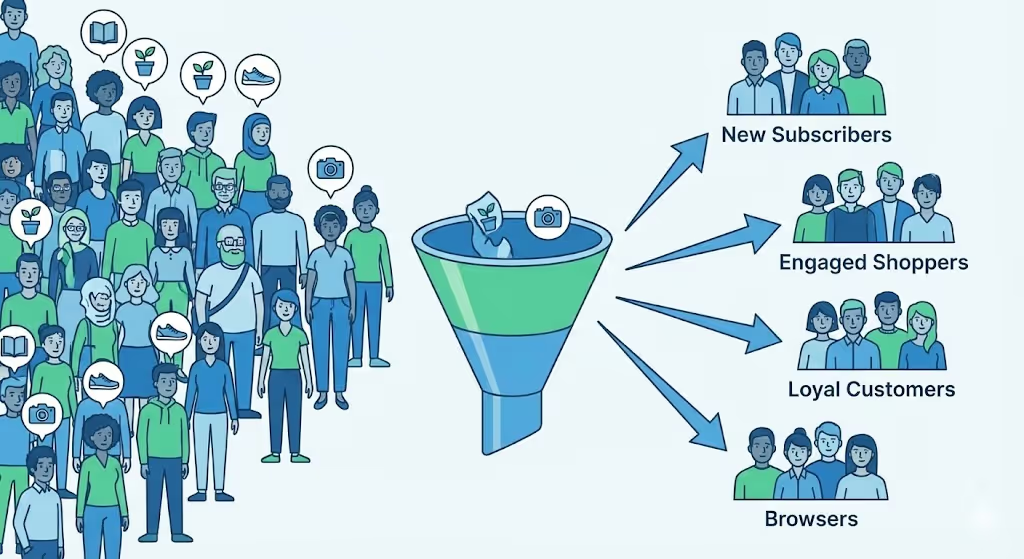
1. Don’t Treat All Subscribers the Same
Email fatigue begins as soon as every single subscriber gets the same message, no matter who they are and where they are in the buyer’s journey. But someone visiting you for the first time, a return customer, and an inactive subscriber have very different intents, yet most ecommerce brands talk to them in the same way.
Segmentation fixes this. If emails are informed by purchase history, browsing behavior, level of engagement, or lifecycle stage, they can feel relevant rather than repetitive. A useful email doesn't feel like noise, regardless of the frequency with which it arrives. A promotional email becomes draining regardless if sent infrequently. It’s not that we want fewer emails, but fewer pointless messages.
2. Reduce Repetition, Not Frequency
A lot of brands think that sending too frequently is what causes fatigue. The reality is that there are three principal factors, and they don’t have to send the same thing over and over.
When every email becomes a sense of urgency compounded, customers will take it for granted. As time goes on, the pressure builds, and resistance is encountered.
Please do not adjust the frequency, but do shift intent. One message can teach, another can promise you that everything will be fine, another reminder, and a third one is finally leaving you motivated. You can still email frequently, but every email must have a different function in helping your prospect make their decision.
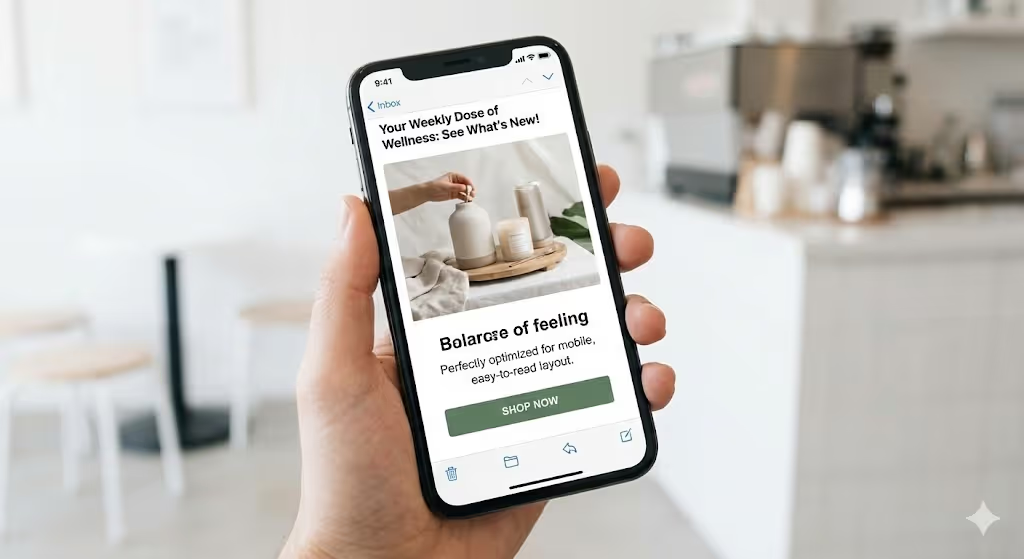
3. Design for Scanning, Not Reading
None of the e-commerce emails we receive is read word by word. They are read on average in seconds, frequently on a phone.
Fatigue comes when emails require an effort to interpret. Long paragraphs, messy layouts, multiple CTAs, and crowded visuals force customers to do more work than they want to.
Ample spacing, brief sections, a clear dominant CTA, and a clear product context ensure you don’t feel like you’ve just read another email.
4. Fix Timing Before Cutting Volume
When timings don’t work, a lot of brands just email less. This usually backfires instead of solving the problem.
Shopify founders suffer more from bad timing than high frequency. Customers don’t act when they have no time, attention, or capacity.
Emails are welcome at the moment when customers have the mental space to open them. Before cutting volume, test timing. Analyze opens, clicks, and emails being acted upon.
The right email at the right time will always win over sending more emails, but at the wrong time.
6. Use Automation to Remove Noise
Manual campaigns lead to competing, colliding, and redundant messages, causing email fatigue.
Automation saves tiredness during those rough patches by matching your emails with your customers’ activity. When the emails are prompted by an event such as browsing, cart abandonment, restock, or purchase, they feel timely and relevant. Messages customers see are the result of actions they’ve already taken, not something the brand is pushing.
Relevance is what makes emails timely and effective.
7. Refresh Copy, Not Just Offers
Email fatigue is not just about discounts becoming less powerful. It’s often about predictable tone.
If every email comes across as a sales pitch, then customers cringe before they open. Eventually, they stop opening altogether.
New copy that makes emails sound “human” once more. Demonstrate the worth of the product and provide context. Your email needs to sound like a conversation, not an argument.
When emails sound helpful, customers pay attention.
8. Re-Engage Instead of Forcing Attention
Pushing harder generally doesn't work when engagement falls.
Re-engagement is most successful when it’s honest and authentic. A brief note, highlighting inactivity, with something of value to offer, or opting down gives them a reset.
Respect builds trust. Trust brings attention back.
PushOwl – Leverage Email Fatigue To Increase Your Revenue
Reducing frequency doesn’t solve email fatigue. It’s solved by getting smarter.
PushOwl helps brands escape the inbox noise to achieve inbox relevance. By linking newsletters and automated flows with engagement and revenue, PushOwl demonstrates what works for eliminating fatigue.
Campaigns with better timing, a cleaner structure, and messaging based on intent result in more clicks, better recovery rates, and more repeat orders.
Fix relevance. Improve readability. Send at the right moment. PushOwl makes email a growth engine (instead of a distraction).